
Consultation
+91 97731 50167
New Wage Code Forms 2025
Learn about the mandatory New Wage Code Forms 2025/2026 compliance requirements, mandatory registers and forms including Form I Employee Register, Form IV Wage Register, Form V Wage Slip, and Form IX Attendance Register. A complete guide for HR professionals and employers.
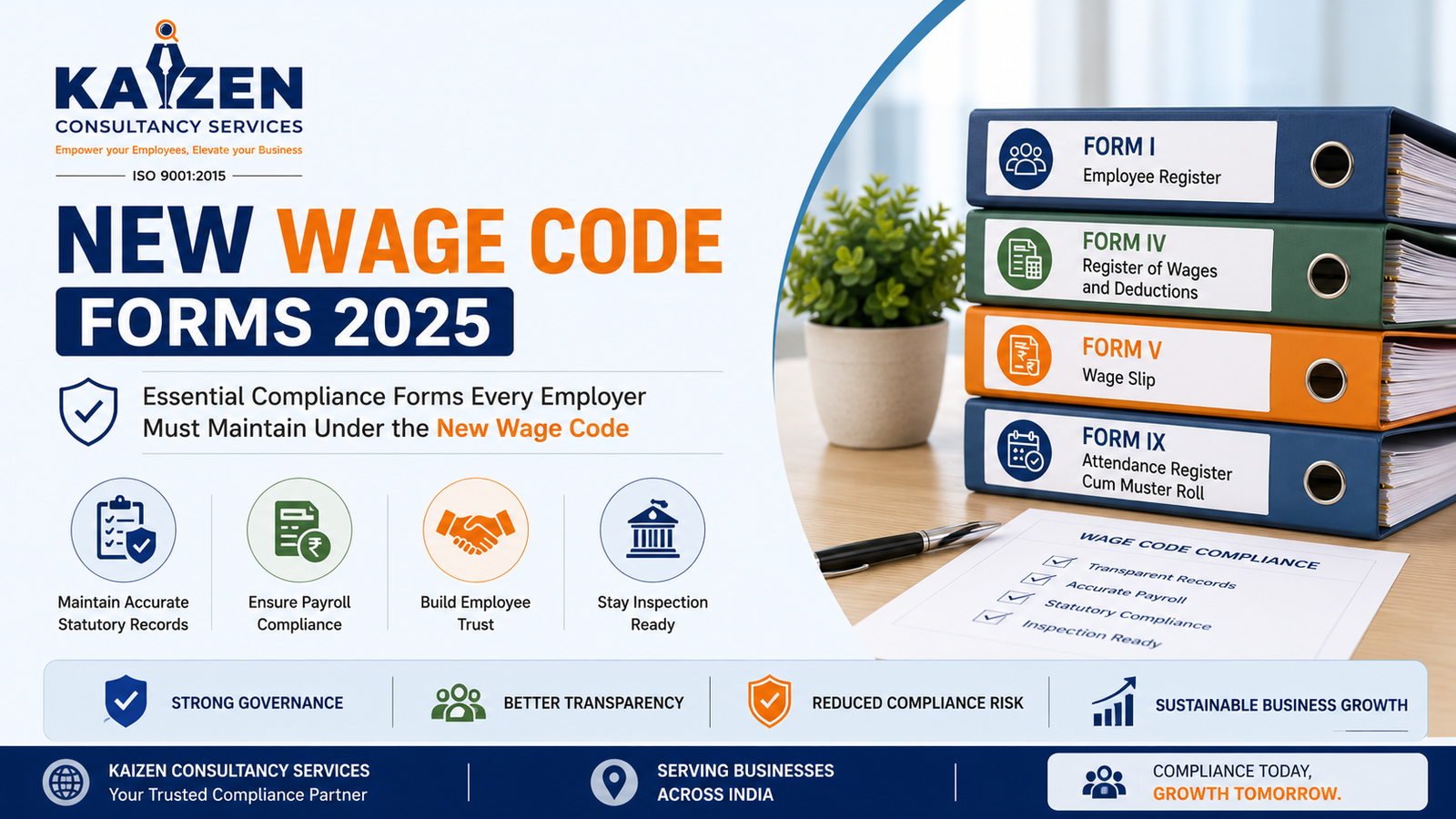
New Wage Code Forms 2025/2026 - Mandatory Registers and Forms Every Employer Must Maintain
The implementation of India's Labour Codes is driving a major transformation in HR documentation, payroll administration, and statutory compliance. One of the most important responsibilities for employers under the Code on Wages, 2019 is maintaining prescribed registers and records in the specified formats.
Many organizations continue to maintain outdated registers designed under repealed labour laws. However, under the new framework, employers are expected to maintain standardized records that improve transparency, employee protection, and regulatory compliance.
For company owners, HR professionals, payroll managers, and compliance officers, understanding these mandatory forms is essential to avoid penalties and ensure smooth labour inspections.
This article explains the importance of key Wage Code forms, including Form I, Form IV, Form V, and Form IX, and provides practical guidance for compliance.
New Labour Code
Overview of the New Wage Code
The Code on Wages, 2019 was enacted to simplify and consolidate wage-related labour laws in India. The Code replaces:
- Minimum Wages Act, 1948
- Payment of Wages Act, 1936
- Payment of Bonus Act, 1965
- Equal Remuneration Act, 1976
The primary objectives include:
- Uniform wage definitions
- Timely payment of wages
- Transparent payroll systems
- Standardized employee records
- Simplified compliance procedures
- Improved worker protection
To support these objectives, employers must maintain prescribed registers and records in electronic or physical form.
Key Changes HR and Employers Must Implement
- Standardised Record Keeping
The Wage Code introduces uniform formats for maintaining employee and wage records across establishments.
- Increased Transparency
Employers must maintain detailed records of:
- Employee information
- Attendance
- Wage payments
- Overtime
- Deductions
- Advances
- Digital Compliance
The Labour Codes permit maintenance of registers electronically, making record management more efficient and accessible during inspections.
- Stronger Inspection Mechanism
Labour authorities may verify compliance through inspections, making proper maintenance of prescribed forms critical.
Importance of Maintaining Prescribed Wage Code Forms
Maintaining statutory forms is not merely an administrative task.
These records serve as:
- Legal evidence during labour disputes
- Proof of wage payments
- Compliance documentation during inspections
- Audit records
- Protection against employee claims
- Evidence of statutory compliance
Failure to maintain prescribed records may result in penalties and increased legal exposure.
Form I – Employee Register
What is Form I?
Form I is the Employee Register prescribed under the Wage Code Rules.
It serves as the master employee database for the establishment.
Information Generally Captured
The register contains details such as:
- Employee Name
- Employee Code
- Gender
- Date of Birth
- Father's/Mother's Name
- Date of Joining
- Designation
- Skill Category
- Nature of Employment
- UAN Number
- ESIC Number
- Contact Details
- Employment Status
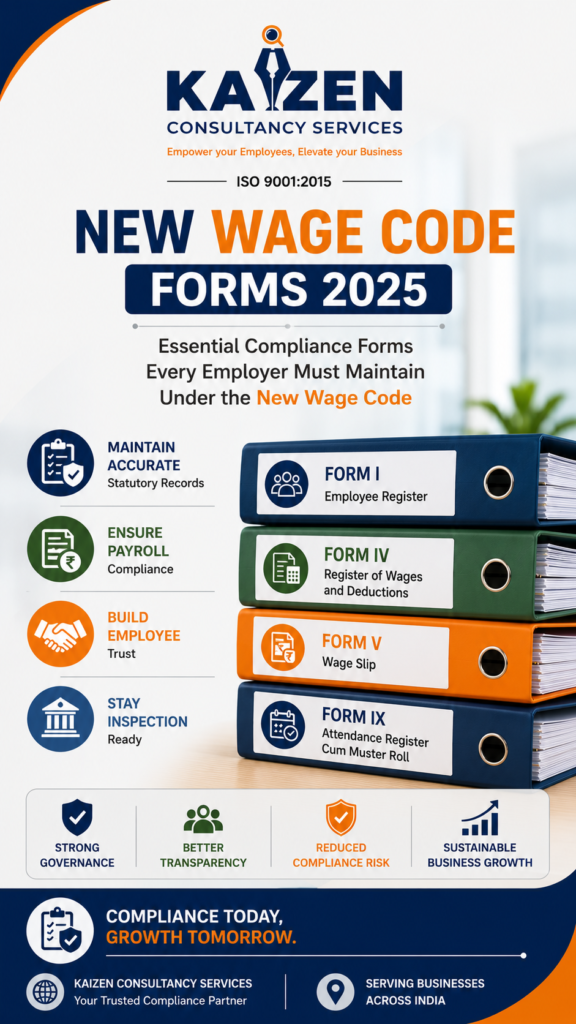
Why Form I is Important
Complete Employee Documentation
Provides a centralized record of all employees.
Inspection Readiness
Labour authorities frequently review employee records during inspections.
HR Data Management
Helps HR departments maintain accurate employment records.
Compliance Evidence
Demonstrates adherence to Labour Code requirements.
Form IV – Register of Wages, Overtime, Advances, Fines & Deductions for Damages and Loss
What is Form IV?
Form IV is one of the most important statutory payroll registers.
It records all wage-related transactions and deductions.
Key Information Maintained
Wage Details
- Basic Wage
- Dearness Allowance
- Other Allowances
Overtime Records
- Overtime Hours
- Overtime Wages Paid
Advances
- Salary Advances
- Recovery Details
Fines
- Authorized Fines
- Reasons for Fines
Damages and Loss Deductions
- Nature of Damage
- Recovery Amount
- Supporting Records
Benefits of Maintaining Form IV
Payroll Transparency
Creates a clear wage payment trail.
Dispute Prevention
Helps resolve wage-related disputes quickly.
Audit Support
Provides documentary evidence during statutory audits.
Labour Law Compliance
Demonstrates compliance with wage payment requirements.
Form V – Wage Slip
What is Form V?
Form V is the Wage Slip issued to employees.
Every employee should receive a wage slip containing complete wage particulars.
Key Contents of Form V:
Employee Information
- Employee Name
- Employee Code
- Designation
Wage Details
- Basic Pay
- Dearness Allowance
- Other Allowances
Earnings
- Gross Wages
- Overtime Earnings
Deductions
- PF Contribution
- ESIC Contribution
- Professional Tax
- Income Tax
- Other Authorized Deductions
Net Pay
- Final Amount Payable
Why Form V is Important
Employee Transparency
Employees can clearly understand salary calculations.
Trust Building
Promotes transparency between employer and employee.
Statutory Compliance
Supports compliance with Wage Code provisions.
Payroll Accuracy
Reduces salary-related complaints and disputes.
Form IX – Attendance Register Cum Muster Roll
What is Form IX?
Form IX combines attendance records and muster roll information into a single register.
This is one of the most critical records maintained by employers.
Information Maintained in Form IX
Employee Attendance
- Daily Attendance
- Weekly Attendance
- Monthly Attendance
Working Hours
- Shift Timings
- Working Hours
- Weekly Offs
Overtime Information
- Extra Working Hours
- Overtime Eligibility
Leave Records
- Paid Leave
- Casual Leave
- Sick Leave
- Other Leave Categories
Importance of Form IX
Attendance Verification
Provides evidence of employee presence.
Wage Calculation Support
Attendance records form the basis of salary processing.
Overtime Verification
Supports overtime wage calculations.
Legal Protection
Protects employers in disputes relating to attendance and wages.
HR Compliance Checklist Under the New Wage Code
Every HR department should verify:
✓ Form I Employee Register maintained and updated
✓ Form IV Wage Register maintained monthly
✓ Form V Wage Slips issued to employees
✓ Form IX Attendance Register updated daily
✓ Employee records reconciled with payroll
✓ UAN and ESIC details updated
✓ Overtime records maintained
✓ Wage deductions properly documented
✓ Electronic records securely stored
✓ Records readily available for inspection
Is Form I mandatory under the Wage Code?
Yes. Employers should maintain an updated Employee Register containing prescribed employee information.
Can Wage Code registers be maintained electronically?
Yes. The Labour Codes permit maintenance of records in electronic form subject to applicable requirements.
Is Form V wage slip mandatory?
Employees should be provided wage slips containing complete wage details and deductions.
Why is Form IV important?
Form IV records wages, overtime, advances, fines, and deductions, making it one of the most important payroll compliance registers.
What is Form IX Attendance Register Cum Muster Roll?
It is a statutory register used to maintain attendance, working hours, leave, and overtime records.
How often should these registers be updated?
Attendance should be recorded daily, while wage-related records should be updated regularly as part of payroll processing.
Conclusion
The New Wage Code framework places significant emphasis on transparency, record maintenance, and payroll compliance. Forms such as Form I (Employee Register), Form IV (Register of Wages and Deductions), Form V (Wage Slip), and Form IX (Attendance Register Cum Muster Roll) are foundational compliance documents that every employer should maintain accurately.
For HR professionals and company owners, adopting these forms is not only a statutory requirement but also a best practice that strengthens governance, improves employee trust, and protects organizations from compliance risks.
Organisations should review their existing documentation systems and ensure that all Wage Code registers are updated, maintained, and readily available for inspection in accordance with applicable rules.
Organizations should review their existing documentation systems and ensure that all Wage Code registers are updated, maintained, and readily available for inspection in accordance with applicable rules. Contact Us for New Labour Code Implementation Consultancy