
Consultation
+91 97731 50167
New Labour Codes 2025
What Businesses Need to Know
The Indian Government has introduced four New Labour Code 2025 (effective November 2025) to replace 29 old labour laws. In simple terms, these new rules aim to make life easier for both workers and business owners. Whether you run a shop in Mumbai or work in a local factory, these changes affect you. Read more in detail below.

Implementation of Four Labour Codes in India
On 21 November 2025, the Government of India implemented the four Labour Codes. The Code on Wages (2019), Industrial Relations Code (2020), Code on Social Security (2020), and Occupational Safety, Health and Working Conditions Code (2020), replacing 29 existing labour laws to simplify regulations and strengthen workforce protection.
These reforms were introduced to modernize labour governance, as many older laws dated back to the pre-Independence and early post-Independence period, making them unsuitable for current economic and employment realities. The four Labour Codes aim to promote better wages, enhanced safety standards, wider social security, and overall welfare for workers while also reducing compliance burden for industries.
New Labour Codes
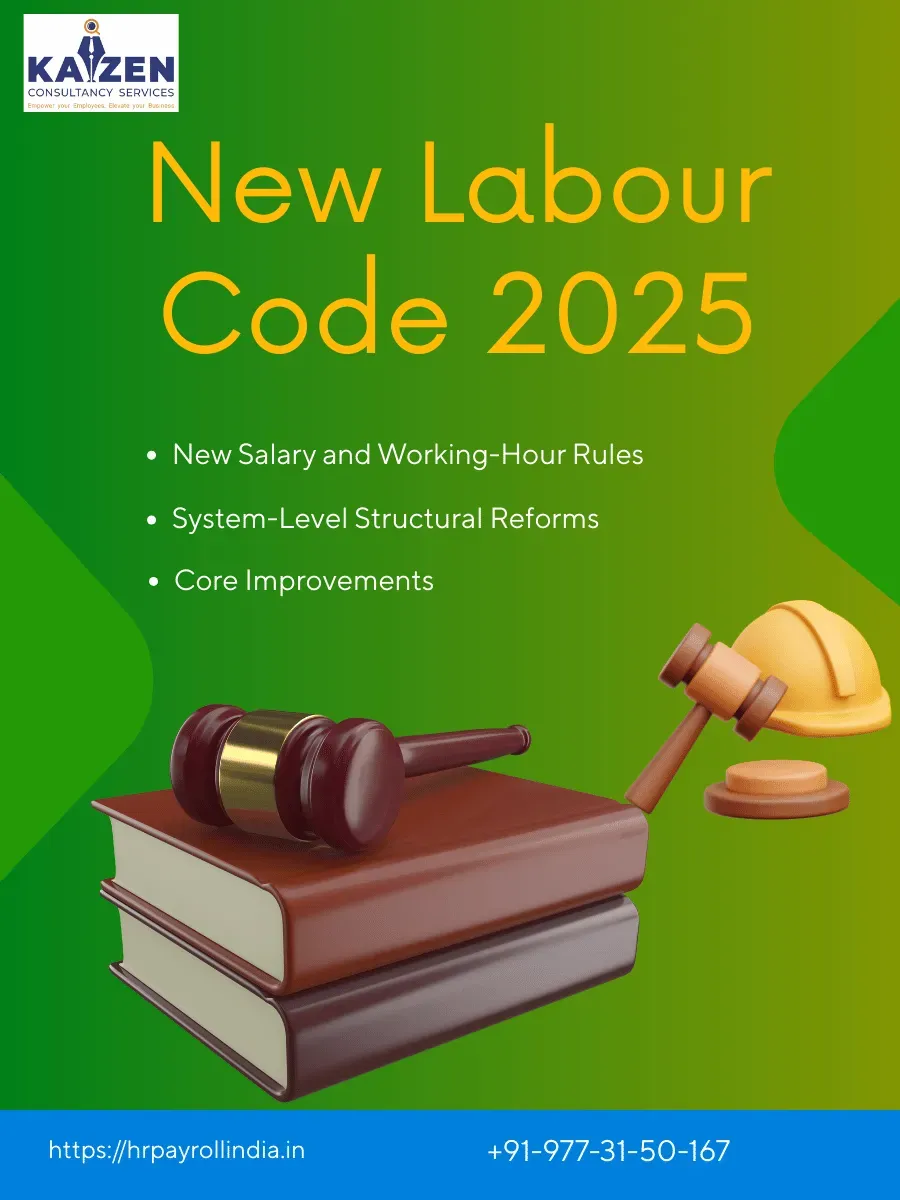
Core Improvements Introduced
1. Mandatory appointment letters for all workers.
2. Minimum wages guaranteed for every employee across sectors.
3. Timely wage payment becomes compulsory.
4. Free annual health check-ups for workers above 40 years.
5. Women are allowed in all occupations, including night shifts, with safety measures and consent.
6. ESIC coverage expanded nationwide, including hazardous units.
New Labour Code 2025
New Salary and Working-Hour Rules
1. Minimum 50% of CTC must be Basic + DA under the revised wage structure.
2. Working hours capped at 8 hours per day and 48 hours per week.
3. Overtime must be paid at 2× the hourly wage rate.
4. Salary must be paid on or before the 7th of the following month.
5. Single digital labour register replaces 15+ physical registers.
6. Online inspections allowed for hassle-free compliance.
Labour Law Consultants in Mumbai
Impact Across Worker Segments
The Codes expand welfare and protection across diverse worker groups including fixed-term employees, gig and platform workers, contract workers, MSME workers, women, youth, migrant workers, digital and media professionals, mine and dock workers, plantation workers, textile workers, IT & ITES employees, export-sector employees, and hazardous-industry workers. Reforms include equal benefits for fixed-term employees, double wages for overtime, gratuity eligibility after one year, mandatory safety equipment, and formal recognition with guaranteed social security benefits.
Labour Law Compliance
System-Level Structural Reforms
1. To enhance long-term labour governance, the Codes introduce:
2. National Floor Wage to ensure basic living standards across states
3. Gender-neutral pay and non-discrimination protections (including for transgender persons)
4. Inspector-cum-Facilitator system to encourage compliance through support rather than punitive action
5. Faster dispute resolution through two-member tribunals
6. Single registration, single licence and single return to reduce regulatory complexity
New Labour law Code 2025
Key Benefits for Employees New Labour Code 2025
1. Higher take-home benefits
2. Better retirement and social security
3. Guaranteed timely payment of wages
4. Fairly compensated overtime
5. Mandatory weekly rest and work-life balance
6. Universal wage protection across industries
Labour Law Compliance
Long-Term Expected Outcomes
These reforms strengthen India’s transition toward a protected, productive and future-ready workforce, improving opportunities especially for women, youth, migrant, gig, and unorganised workers. At the same time, simplified compliance and flexible work structures are expected to support industry competitiveness and employment growth. The Labour Codes position India’s labour framework closer to global standards of social justice and worker protection, reinforcing the government’s commitment to a pro-worker and pro-employment ecosystem.
How Businesses Benefit from New Labour Code 2025
It’s not just workers who win. Businesses in Mumbai also see advantages:
- Less Paperwork: Kaizen Consultancy Services often tells clients how single window compliance saves time. No more running between offices for multiple licenses.
- Clear Rules: Owners know exactly what’s needed for wages, working hours, and benefits. This clarity helps avoid fines.
- Fair Competition: When everyone follows the same wage rules, honest businesses don’t lose out to those who underpay staff.
- Stronger Workforce: Happy workers with benefits and job security are often more productive and loyal. This can boost business in a tough market like Mumbai.
Example: A small bakery in Dadar used to juggle separate ESI, PF, and labour filings. Now with one registration, the owner spends less time on paperwork and can focus on growing the business.
Real-Life Example
Imagine Shweta, who owns a small call center in Navi Mumbai. Before the codes, she had separate registrations for PF and ESI, and no standard process for hiring freelancers. Under the new rules, she has one online account for all labour compliances. She offers her team appointment letters and timely wages, and her workers are happier and more secure. Shweta can even hire contract staff, knowing they’ll get the same benefits (like leave and gratuity) as full-time staff, which makes hiring easier.
Need Help with New Labour Code 2025?
These changes are major, and local businesses may have questions. For example, do you qualify as an “employee” under the new definitions? How do you start PF and ESI for gig workers? That’s where a knowledgeable guide helps.
Kaizen Consultancy Services, a trusted Labour Law Consultant in Mumbai, can help you understand and apply these new rules. We make sure your Mumbai business stays Labour Law Compliant and treats workers fairly. Contact Kaizen Consultancy Services today for professional, friendly advice on the Labour Codes 2025 and all labour law matters in Mumbai. Your business will thank you!
Kaizen Consultancy Services, a trusted Labour Law Consultant in Mumbai, can help you understand and apply these new rules. We make sure your Mumbai business stays Labour Law Compliant and treats workers fairly. Contact Kaizen Consultancy Services today for professional, friendly advice on the Labour Codes 2025 and all labour law matters in Mumbai.